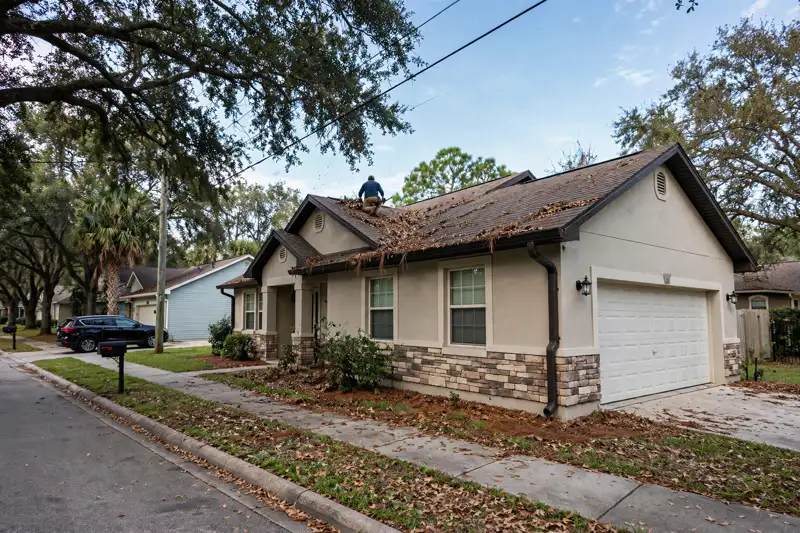
Debris holding water on the roof
Needles and leaves in a valley hold water against shingles and rot the deck underneath. We clear them before they do.
Houston’s heat, rain and pine needles wear a roof out between replacements. A maintenance visit checks the parts that fail first — sealant, vent boots, flashing, gutters — and fixes them while they are small. Start with a roof inspection if you have never had one, or book a tune-up below.
Roof maintenance is a scheduled visit, not a repair call: debris cleared from valleys and gutters, sealant and fasteners checked, vent boots and flashing inspected, and the roof’s condition recorded so wear is tracked year to year. In Houston the drivers are specific — pine needles piling in valleys and behind chimneys, debris holding water against shingles and the roof edge, and heat and humidity ageing sealant and boots faster than in cooler climates.
Three services fold into maintenance here: roof tune-ups, gutter cleaning and roof cleaning. A tune-up is the check-and-fix visit itself. Gutter cleaning keeps water moving off the roof edge instead of backing up under the first course of shingles. Roof cleaning is a soft-wash algae treatment — never pressure washing, which strips granules from shingles. See roof repair when a visit finds something that needs fixing, and attic ventilation when heat is the problem.
One visit, three jobs: tune-up, gutter cleaning and roof cleaning — each one keeping a sound roof sound.
The check-and-fix visit: sealant touched up, fasteners checked, vent boots and flashing inspected, and small issues fixed while they are small.
Gutters and downspouts cleared so water leaves the roof edge instead of backing up under shingles and rotting the decking along the eaves.
A soft-wash treatment for algae and moss — the dark streaks on shaded Houston slopes. Pressure washing is never used on shingles: it strips granules and shortens roof life.
Pine needles, leaves and branches cleared from valleys, behind chimneys and off flat sections, where they hold water against the roof.
Soffit intake and ridge exhaust checked for blockages. Poor ventilation is a documented Houston failure mode — see our attic ventilation page.
Call (346) 654-5170 during office hours and tell us the roof’s age and what you have noticed — streaks, debris, a stain, or nothing at all.
Valleys, gutters and the roof edge are cleared of needles, leaves and branches, so water can leave the roof instead of sitting on it.
Sealant, fasteners, vent boots, flashing and intake vents are checked one by one, with anything worn noted and photographed.
Small issues are fixed in the same visit — a boot, a sealant joint, a fastener. Anything bigger is scoped in writing as a repair.
The roof’s condition is recorded, so wear is tracked year to year and the next visit starts from facts, not memory.
Light tools and a soft touch — maintenance should never damage the roof it is meant to protect.
Gutters and valleys cleared by hand and blower, so debris comes off without tearing shingles.
Low-pressure algae treatment for shaded slopes — never a pressure washer on shingles.
Sealant touched up where it belongs — at flashing and joints — during the same visit.
Checks whether debris or a failed boot has already let water into the decking.
A stable ladder footing on Houston’s varied roof pitches, so the crew can work safely.
Fall protection for every crew member on every roof, tied off to a proper anchor.
Before: valleys holding water behind packed needles, with granule loss starting underneath.
After: valleys cleared, the roof edge checked, and the gutters flowing again.
Before: dark algae streaks across the north slope, with the shaded roof staying damp after every storm.
After: a soft-wash algae treatment, with no pressure washing and no granule loss.
Before: a vent boot cracked by Houston heat, with no leak yet — and no one looking.
After: the boot replaced during a tune-up, before it became a ceiling stain.
Most Houston roof failures start small and hide. Maintenance is how they get found while they are still small.
Call (346) 654-5170Needles and leaves in a valley hold water against shingles and rot the deck underneath. We clear them before they do.
Houston heat dries sealant and cracks boots years before the shingles wear out. A tune-up catches both.
A full gutter sends rain back under the first course. Cleaning the gutter protects the decking along the eaves.
Shaded slopes stay damp and grow algae. Soft-wash treatment clears it without the granule damage pressure washing causes.
Every review quoted on this site is a verbatim Google review. Read more on our Google profile.
A tune-up is a check-and-fix visit: debris cleared from valleys and gutters, sealant and fasteners checked, vent boots and flashing inspected, and small issues fixed while they are small. What it finds is recorded, so wear is tracked year to year and nothing is left to become a leak.
At least once a year, and after hail season. Houston’s heat, humidity and spring hail wear sealant, boots and flashing faster than the shingles themselves, so an annual visit — ideally in the December-to-April inspection window — catches the parts that fail first.
No. Pressure washing strips granules from asphalt shingles and shortens roof life. Roof cleaning here means a soft-wash algae treatment for the dark streaks on shaded slopes, plus debris removal from valleys and the roof edge.
No — they are different jobs. An inspection is a full assessment with a photo and video report and a written assessment, usually before a repair, a replacement or a claim. Maintenance is the scheduled visit that keeps a sound roof sound. If you have never had an inspection, start there.
 Roof InspectionEvery slope photographed, the attic checked where there is access, and a written assessment with photos and video.Explore →Roof RepairShingle, flashing, vent-boot, valley and ridge-cap repairs, plus fascia and soffit at the roof edge.Explore →
 Gutter InstallationGutters and downspouts that move Houston rain off the roof edge instead of under the shingles.Explore →
 Attic VentilationBalanced ridge and soffit ventilation, vent installation and attic fans for Houston heat and humidity.Explore →
 Roof Leak RepairLeaks traced to their source and fixed properly, with the interior damage taken care of too.Explore →
 Roof ReplacementFull tear-off to the deck and a complete new system — shingle, metal, tile or flat — with the permit handled.Explore →Residential RoofingEverything we do on Houston homes, from inspection to final walk.Explore →
 Storm Damage Roof RepairWind, hurricane and tree damage assessed, documented and repaired after the storm.Explore →
Call (346) 654-5170 during office hours. We will clear the debris, check the boots and flashing, and record your roof’s condition so wear is tracked year to year.
Call (346) 654-5170Call (346) 654-5170 or send us a message and we will get back to you during office hours. Tell us the roof’s age and what you have noticed — streaks, debris, a stain, or nothing at all.